5 Reasons Your Small Business Website Needs a Redesign in 2026
Your website is often the first impression customers have of your business. If it was built more than a few years ago, it may be actively working against you.

The design standards, performance requirements, and search engine expectations of 2026 are dramatically different from what they were even two or three years ago. A site that was perfectly serviceable in 2022 can be actively dragging down your search rankings and losing you customers today — without looking any different to you.
Here are five signs it's time to rebuild, and what you should actually prioritize when you do.
1. It Wasn't Built for Mobile First
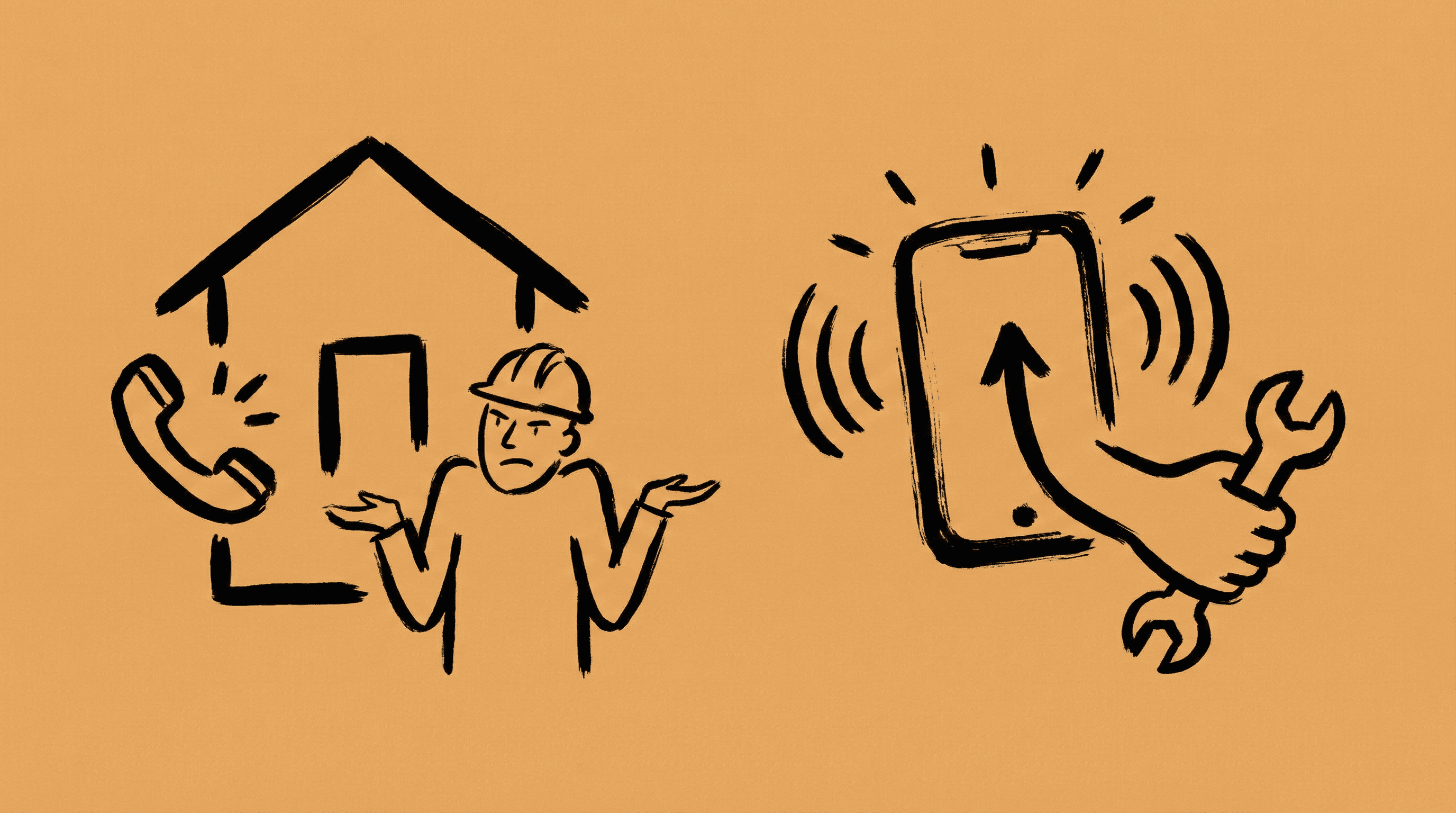
Pull up your website on your phone right now. Try to find your phone number, navigate to a specific service, and fill out the contact form. If any part of that felt clumsy, slow, or frustrating — your mobile visitors are feeling the same thing, and most of them are leaving.
More than 60% of web traffic is mobile. For local service searches — the kind where someone needs a contractor, a plumber, an HVAC tech — the number is even higher. People are searching from their phones, in the moment, looking for someone to call.
A mobile-friendly site is a desktop site that shrinks to fit a phone screen. A mobile-first site is designed for the phone experience from the ground up — fast load times, tap-friendly buttons, a visible phone number you can call in one tap. Google has used mobile-first indexing for years, which means your mobile experience directly affects how you rank on every device, including desktop.
2. It Loads Too Slowly
The benchmark in 2026 is under two seconds. Most older websites — especially those built on heavy page builders, loaded with plugins, or sitting on cheap shared hosting — load in four to six seconds. Sometimes more.
Every Second Costs You
Conversion rates drop roughly 7% for every additional second of load time (Source: Deloitte).
The biggest offenders are almost always uncompressed images and outdated hosting. Portfolio photos from a DSLR camera are often 4–8MB each. The same image, compressed properly, can be under 200KB with zero visible difference on screen. Modern frameworks like Next.js handle a lot of this automatically — it's one of the reasons we build in it.
3. Google Can't Read It Properly
A site can look great to humans and be largely invisible to search engines. Older sites commonly have the same title tag on every page, missing or generic meta descriptions, no structured data markup, and content buried in ways crawlers struggle to parse.
Structured data (schema markup) is particularly important in 2026. It tells Google exactly what your business is, what services you offer, where you operate, and what customers say about you. It's one of the factors Google uses to decide whether to include you in AI Overviews. If your site doesn't have it, you're at a disadvantage against competitors who do.
If your traffic has declined over the past year or two without an obvious explanation, the site's technical foundation is worth investigating. An SEO audit can identify exactly what's holding you back.
4. It's Not Accessible
Web accessibility lawsuits against small businesses have increased significantly. That alone is worth paying attention to. But beyond legal risk, accessibility improvements often directly improve user experience and SEO at the same time.
Common issues we see on older sites: text that's too light to read comfortably, images with no alt text, forms that can't be completed without a mouse, navigation that doesn't work with a keyboard. These issues affect a significant portion of your potential customers — including roughly 25% of Americans who have some form of disability.
A modern rebuild should treat accessibility as a foundation requirement, not an afterthought.
5. It's Getting Traffic But Not Generating Calls
If people are finding your site but not contacting you, the problem is the site itself — not the traffic. This is usually a combination of unclear calls-to-action, missing trust signals, and conversion friction that's invisible to the business owner because they're not the one trying to figure out how to hire themselves.
The most common culprits:
- No reviews or testimonials visible near the contact form
- Phone number not clickable on mobile
- Contact form with too many required fields
- No clear next step on service pages
- Value proposition buried below the fold
A redesign focused on conversion — not just aesthetics — addresses all of these by design.
What a Modern Small Business Website Actually Costs
We offer two tiers, and we're upfront about both.
For businesses that need a professional online presence without a large upfront investment, our $100 Website covers the essentials — up to 10 custom pages, mobile responsive design, free domain and hosting for the first year, SEO setup, contact forms, and a year of free maintenance. It's our most popular option for small service businesses getting started.
For businesses that need more — advanced functionality, lead capture integrations, e-commerce, or a fully custom content strategy — our Custom Design tier starts at $3,500. That's the right fit when you need something built to your specific business process, not just a polished presence.
The more important number in either case is what your current site is costing you right now. One missed job a month from a slow, unfindable website adds up fast. We've rebuilt sites for businesses who paid bargain prices two years ago and are paying again now because the original site never ranked, never converted, and couldn't be updated without breaking. You end up paying twice.
Not sure which option fits your situation? Reach out and we'll tell you straight.
Common Questions
Will a redesign hurt my current rankings?
Not if it's handled correctly. Proper redirects from old URLs to new ones, preserved content and metadata, and a technically clean build will typically maintain or improve your rankings. A redesign done carelessly — with broken redirects or drastically changed URL structures — can hurt. Make sure whoever builds it has done this before.
How long does it take?
For a small business site, four to eight weeks from kickoff to launch is realistic. Rushing it leads to corners getting cut that affect performance and SEO.
Can I update it myself afterward?
Depends on how it's built. We build our sites so that business owners can update text, photos, and basic content without touching code. Structural changes are a different story — but most businesses don't need those often.
Ready to talk through whether your site needs a rebuild? Contact us for a free consultation. We work with service businesses and contractors in Denison, Sherman, and across the Texoma area.

Founder, Polygon Digital
Justin Crump is the founder of Polygon Digital, a web design and SEO agency based in Denison, TX. He works with contractors and service businesses across the Texoma area to build fast, conversion-focused websites and local SEO strategies that generate real leads.